


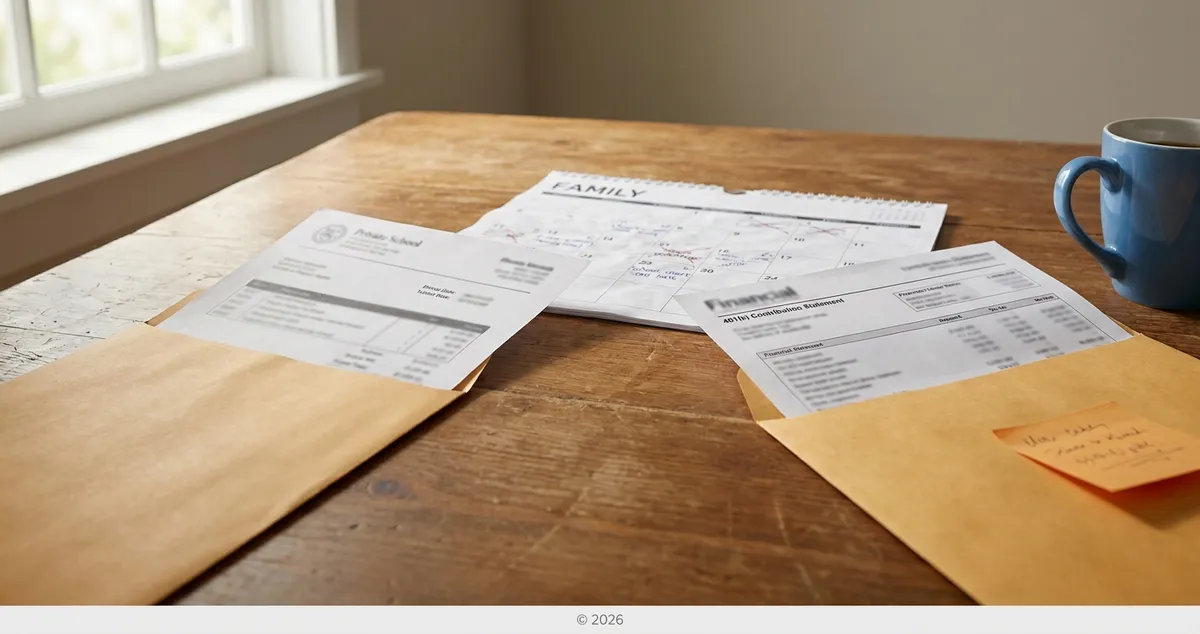
Private school tuition is treated as a parenting decision, not a financial planning decision. That framing is expensive. Over 13 years of K-12 private education at a school in the $30,000 to $45,000 per year range, the total outlay runs $390,000 to $585,000. That’s before financial aid, and before the opportunity cost of what those dollars could have done instead.
The question worth asking before writing the first check is not whether private school is better than public. It’s whether the financial structure of the decision aligns with everything else you’re trying to build.
What private school actually costs over the full K-12 horizon
Tuition is the visible number. A $35,000 annual tuition sounds manageable in year one. Over 13 years with a typical 3 to 5% annual tuition increase, the cumulative cost of that $35,000 starting tuition reaches roughly $575,000 at 4% annual increases. That’s a number most families haven’t run before they enrolled kindergarten.
The hidden costs compound the visible ones. Activity fees, uniforms, technology requirements, mandatory fundraising contributions, school trip participation, and the social spending that comes with a peer group at a certain socioeconomic level add 10 to 20% on top of tuition at many schools. A $35,000 tuition school realistically costs $40,000 to $45,000 per family per year in total spend.
For two children, the math changes entirely. Two children at $40,000 per year average effective cost, staggered across 17 years of overlap, produces cumulative spending that approaches $1,000,000 for families who start both children in kindergarten and graduate both from 12th grade. Per the Bureau of Labor Statistics Consumer Expenditure Survey, education is one of the fastest-growing spending categories for households in the top income quintile. This is where most of it goes.
What that capital does on the alternative path
$40,000 per year invested in a taxable account over 13 years, earning 7% annually, grows to approximately $855,000 by the end of the K-12 period. That’s the comparison base for one child.
For families in the IRS top marginal bracket, this isn’t a pure comparison since tuition comes from after-tax dollars. But the opportunity cost of the capital is real regardless of the tax treatment.
The retirement interaction most families miss
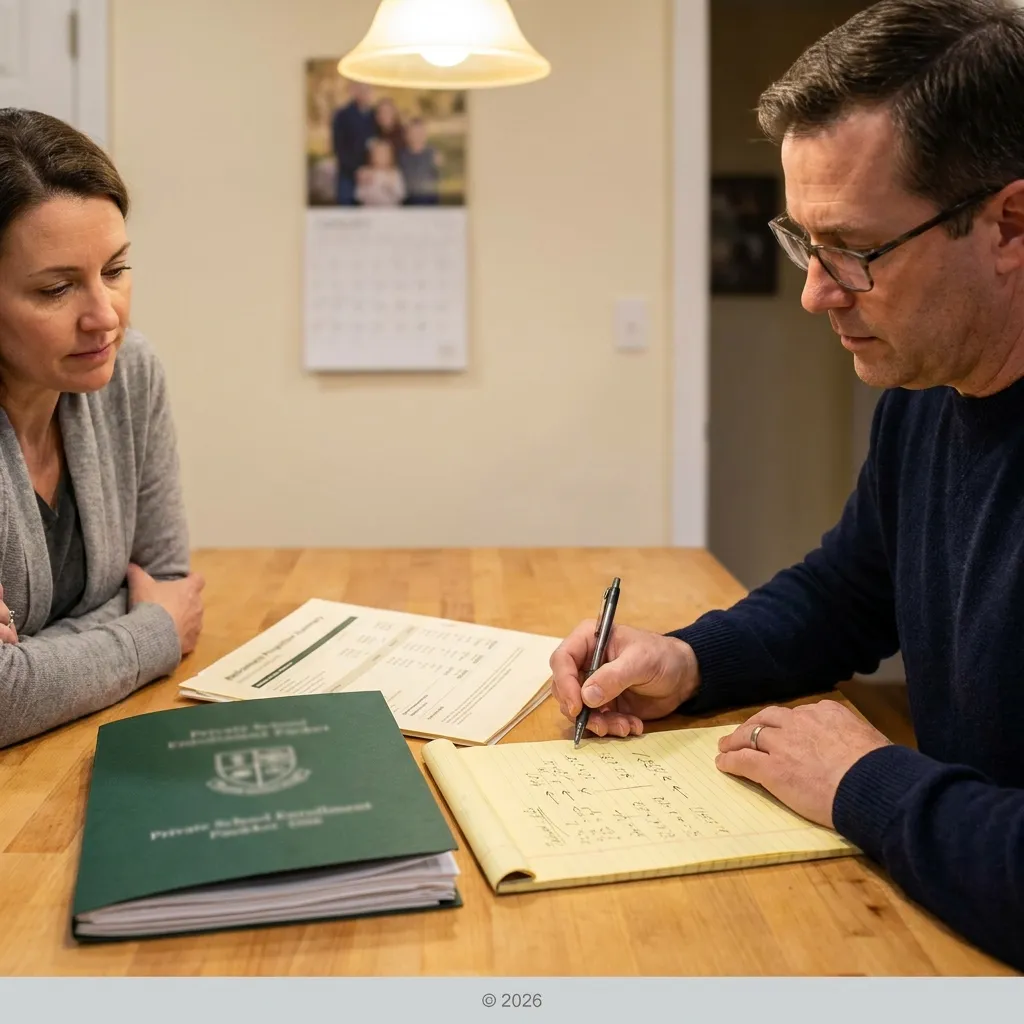
Here’s where the private school decision intersects with retirement planning in a way that rarely gets discussed early enough.
The years of peak private school tuition spending, roughly ages 35 to 55 for most parents, overlap almost exactly with the peak years of retirement contribution and compounding opportunity. Per the IRS, the 2026 contribution limit for a 401(k) is $23,500 per employee, with an additional $7,500 catch-up starting at 50. A household spending $40,000 per year on private school tuition is potentially foregoing the compounding on that capital during the highest-leverage years of the retirement accumulation window.
A dollar contributed to a tax-advantaged retirement account at age 40 has more than 25 years to compound before a typical retirement age. A dollar spent on tuition during that same period doesn’t. The interaction between private school spending and retirement trajectory is the calculation that typically goes unrun until the family is in year 8 of the commitment.
When the private school decision holds up financially
Jeff isn’t arguing that private school is wrong. He’s arguing that it should be a considered financial decision, not an automatic enrollment that escalates into an assumed commitment.
The decision holds up when the family has retirement savings on track without factoring tuition into the cashflow calculation. When the spending is genuinely discretionary and not funded by deferring retirement contributions or carrying consumer debt. When there’s a realistic plan for the college funding gap that private school tuition typically creates, students from private secondary schools often have higher college expectations that carry their own cost structure.
The decision deserves more scrutiny when retirement projections are assuming a later retirement date than the family wants, when tuition payments are reducing the family’s investment contributions below what the retirement math requires, or when the commitment was made in year one without projecting what year 10 looks like.
Schedule a no-obligation call with Jeff to model the actual interaction between your education spending and your retirement timeline.
,-
The information provided is for educational purposes only and should not be construed as investment advice. Investment strategies should be tailored to individual circumstances, risk tolerance, and goals. Past performance doesn’t guarantee future results. Consult with qualified financial professionals regarding your specific situation.
Securities offered through LPL Financial, Member FINRA/SIPC. Investment advice offered through Great Valley Advisor Group, a registered investment advisor and separate entity from LPL Financial.
© 2026 JeffJudgeCFP.com | Not to be reproduced in whole or in part. All rights reserved.
§