


Last reviewed: July 2026
If you have ever wondered why advisors sell annuities so aggressively while barely mentioning a plain index fund, the answer is rarely about your retirement. It’s about how the product pays the person recommending it. An annuity can generate a large one-time commission for the seller. An index fund generates almost nothing. That gap, not your financial situation, explains a surprising amount of what gets pitched to people approaching retirement.
This isn’t a claim that annuities are always wrong. Some people benefit a great deal from them. It’s a claim that the intensity of the sales effort behind annuities has very little to do with whether you need one.
Key Takeaways
- Annuities get pushed hard because they pay a large one-time commission; index funds pay the seller almost nothing.
- How an advisor is paid, commission, AUM, or flat fee, quietly shapes which products you hear about.
- Annuities can fit when you want contractual lifetime income; a QLAC can even move money out of RMD math.
- Per the IRS, the 2026 QLAC limit is $210,000, a legitimate planning tool for the right household.
- Per the IRS, 2026 allows up to $24,500 in a 401(k) and $7,500 in an IRA, low-cost index investing nobody calls to pitch.
About the Author
About the Author: Jeff Judge, CFP®, AEP®, ChFC®, CLU® is a financial planner who writes Viewpoints for JeffJudgeCFP.com. He helps families and business owners read the incentive behind a pitch and judge whether an annuity actually fits the plan, using the R.U.D.D.E.R. Method™, the financial planning process Jeff developed. “A good annuity recommendation survives an honest, side-by-side comparison. The ones that only look good when you’re talked out of comparing are telling you something.”
What Is an Annuity, and Why Does the Commission Matter So Much?
An annuity is a contract with an insurance company. You hand over a lump sum, and in exchange the company promises future payments, sometimes for life. That promise has real value for the right person. The problem is the way the product reaches you.
Most annuities are sold, not bought. The seller often earns a commission paid by the insurance company, frequently a large percentage of the amount you put in. A six-figure annuity purchase can produce a commission in the thousands of dollars to the person who sold it, paid up front, in one shot. Compare that to an advisor who puts the same money into a low-cost index fund and earns a fraction of a percent per year, if anything at all.
Now ask yourself which product a commission-driven salesperson has a reason to talk about for an hour. The incentive structure answers the question before your needs ever enter the room. That is the industry secret hiding in plain sight: the enthusiasm gap between annuities and index funds tracks the commission gap almost perfectly.
Are annuities a bad product?
No. An annuity is a tool, and for the right person, converting part of savings into guaranteed lifetime income is a sound move. The issue isn’t the product; it’s that the intensity of the sales effort tracks the commission, not your need. Judge the contract on its own terms, not on the enthusiasm behind it.
How does the way advisors get paid explain why they sell annuities?
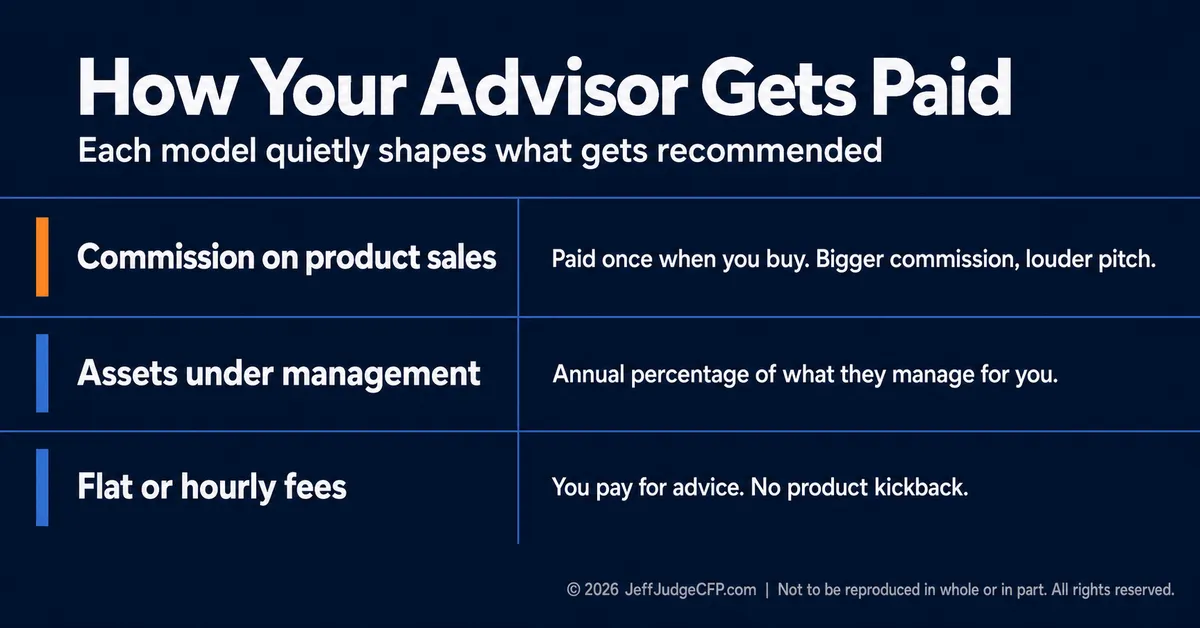
Compensation in financial services runs on a few distinct models, and each one quietly shapes what you hear. Understanding them is more useful than trusting a friendly tone.
Commission on product sales. The seller earns a one-time payment from the product issuer when you buy. Annuities, certain insurance contracts, and some mutual funds pay this way. The larger the commission, the louder the pitch tends to be.
Assets under management, or AUM. The advisor charges an annual percentage of what they manage for you. This model has its own bias, which is a reason to keep money invested rather than, say, using it to pay off a mortgage. But it does not reward pushing any single product.
Flat or hourly fees. You pay directly for advice, period. No product kickback. The bias here is that complicated work can run long, but nobody earns more by steering you into an annuity.
The point isn’t that one model is pure and the others are corrupt. Every model has an angle. The point is that when someone is paid a large commission to sell you a specific product, you should weigh their recommendation accordingly. Misaligned incentives don’t make a person dishonest. They make the advice worth a second look.
When Does an Annuity Actually Make Sense?
Here is where the honest answer lives, because annuities are not a scam. They are a tool, and tools have correct uses.
An annuity can be a reasonable choice when you have a real fear of outliving your money and you want to convert a portion of your savings into contractual lifetime income, backed by the insurer’s claims-paying ability. It can help a person who would otherwise panic and sell during a downturn, because a predictable monthly check changes behavior. The IRS even carves out a specific retirement-account version: a Qualified Longevity Annuity Contract, or QLAC, lets you move money out of required minimum distribution calculations, with a 2026 dollar limit of $210,000 according to the IRS. For the right household, that is a legitimate planning move, not a sales gimmick.
What separates a good annuity decision from a bad one is usually three things. First, whether you actually need the contractual income or just like the sound of it. Second, whether the fees and surrender terms are reasonable for what you get. Third, whether the person recommending it gets paid a commission, because that tells you how much skepticism to bring.
If an annuity is right for you, it should survive a calm comparison against the alternative. If the recommendation only holds up when you are not allowed to compare it to anything, that is your answer.
When is buying an annuity a reasonable decision?
When you genuinely fear outliving your money and want contractual income you won’t panic out of, the fees and surrender terms are reasonable, and the recommendation isn’t driven by a commission. A QLAC, capped at $210,000 in 2026 per the IRS, can also move money out of RMD calculations for the right household.
Why does the boring index fund get no sales pitch?
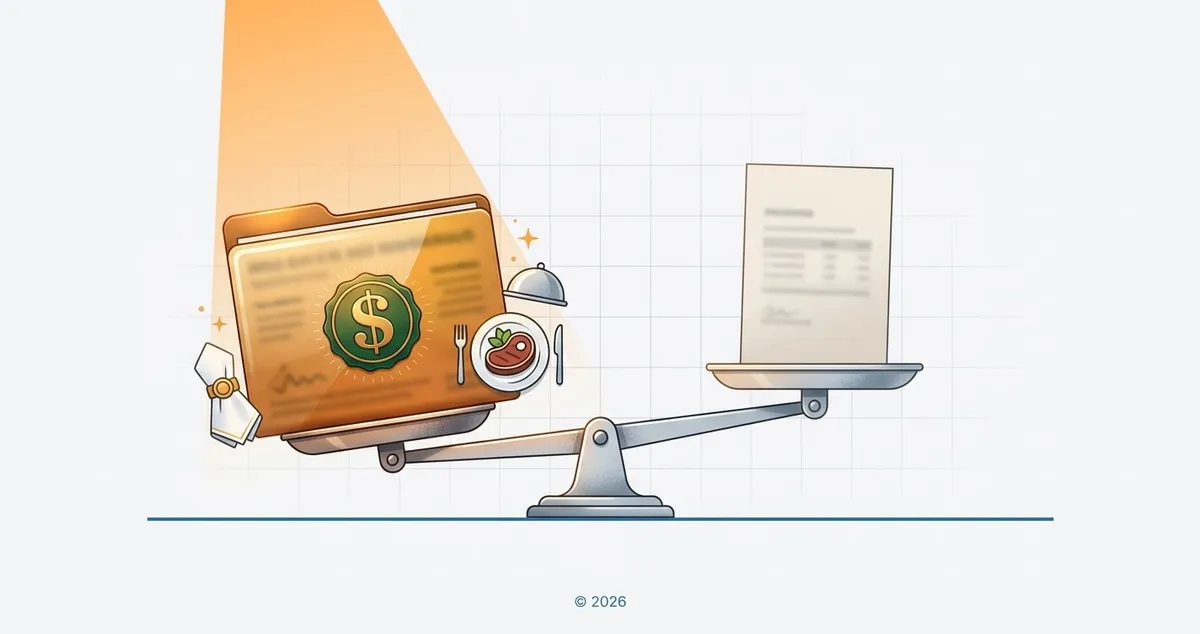
The reason nobody calls you about an index fund is the same reason index funds work: they’re cheap. A low-cost index fund charges a small fraction of a percent per year and pays the person who recommends it close to nothing. There’s no commission to fund a steak dinner and a hard sell.
This creates a strange inversion. The product with the lowest cost to you generates the lowest revenue for the seller, so it gets the least promotion. The product with higher costs and a fat up-front commission gets the seminar, the free meal, and the follow-up calls. Cost to you and effort to sell you run in opposite directions.
The low-cost path is wide open to anyone. For 2026, the IRS allows up to $24,500 in employee contributions to a 401(k), and up to $7,500 in an IRA. A person who steadily funds those accounts with low-cost index funds is doing something that no salesperson has any reason to call them about. Low costs leave more of any return in your account rather than the seller’s, and that quiet discipline rarely gets a phone call. Nobody earns a commission cheering you on, which is precisely why you have to cheer yourself on.
Frequently Asked Questions
Why do advisors push annuities so hard?
Because of how they are paid. A six-figure annuity can generate a commission in the thousands of dollars, paid up front, while putting the same money in a low-cost index fund pays the seller a fraction of a percent or nothing. The sales effort follows the commission, not your need.
How does an advisor’s pay model affect their advice?
Each model carries a bias. Commission rewards selling specific products like annuities. Assets under management rewards keeping money invested rather than, say, paying off a mortgage. Flat or hourly fees reward nothing in particular beyond the advice itself. Knowing the model tells you how much skepticism to bring.
When does an annuity actually make sense?
When you fear outliving your money and want guaranteed lifetime income, the fees and surrender terms are fair, and no commission is steering the recommendation. Per the IRS, a QLAC, capped at $210,000 in 2026, can also remove that money from required minimum distribution calculations for the right household.
Why don’t advisors recommend index funds more?
Because index funds are cheap, they pay the seller almost nothing, so they get little promotion. The lowest-cost option to you generates the least revenue for the seller. Per the IRS, you can fund 2026 contributions of $24,500 in a 401(k) and $7,500 in an IRA with index funds yourself.
What questions cut through the pitch?
When an annuity lands on the table, a few direct questions will tell you more than an hour of explanation.
| Question to Ask | Why It Matters | What a Weak Answer Sounds Like |
|---|---|---|
| How are you paid if I buy this? | Reveals commission incentive directly | “Don’t worry about that, it doesn’t cost you anything” |
| What are the surrender charges and for how long? | Surrender terms can lock your money for years | A vague range, or a pivot to the income feature |
| What is the all-in annual cost, including riders? | Fees stack and erode the benefit | “It’s complicated” with no number |
| What does the same money do in a low-cost portfolio? | Forces an honest comparison | Reluctance to compare at all |
The seller’s willingness to answer plainly is itself the data. A good recommendation survives the comparison. A product that only looks good when you are discouraged from comparing it is telling you something.
None of this means you should never own an annuity. It means the sales effort behind a product is not evidence that you need it. The effort tracks the commission. Your decision should track your situation. If you want a clear, commission-free read on whether an annuity belongs in your plan, schedule a no-obligation call with Jeff and bring the exact contract someone is pitching you. The fine print is where the real answer lives.
The information provided is for educational purposes only and should not be construed as investment advice. Investment strategies should be tailored to individual circumstances, risk tolerance, and goals. Past performance doesn’t guarantee future results. Consult with qualified financial professionals regarding your specific situation.
Securities offered through LPL Financial, Member FINRA/SIPC. Investment advice offered through Great Valley Advisor Group, a registered investment advisor and separate entity from LPL Financial.
© 2026 JeffJudgeCFP.com | Not to be reproduced in whole or in part. All rights reserved.